Custom analytical tooling
Builds the model, calculator or interface an institution needs and does not have — and, critically, builds it so the institution can still run it after the assignment ends.
What it looks like
Decision supported
Whatever recurring decision the institution has to make repeatedly and currently cannot make on its own evidence.
Intended user
Institutions that keep re-commissioning the same analysis because the last consultant left with the spreadsheet.
Inputs
- The decision that has to be made, and how often
- Data the institution already holds, in whatever state it is in
- Who will operate the tool and what they can realistically maintain
- Reporting or regulatory obligations the output must satisfy
Outputs
- A working tool — spreadsheet model, Python application or web interface, chosen for who has to run it
- Documented method, so results can be defended and reproduced
- Handover and training for the team that will own it
- Version control and a change log where the tool will be maintained over time
Methodology summary
We build in the format the client can actually sustain. A ministry team that lives in Excel gets a rigorous, documented workbook rather than a Python service nobody can maintain; a team with engineering capacity gets an application with version control and tests. Where the interface needs real software engineering, our partner Rubik builds it. The choice is made on who operates it afterwards, never on what is most impressive to deliver.
Limitations
- We do not sell software licences or run a SaaS product. These are commissioned tools, built for one institution's decision and owned by it.
- A tool cannot fix a data problem. Where the underlying data does not exist, the first deliverable is an honest account of that gap, not an interface that hides it.
- Sustained maintenance is the client's, unless a support arrangement is agreed separately. We build for handover rather than for dependency.
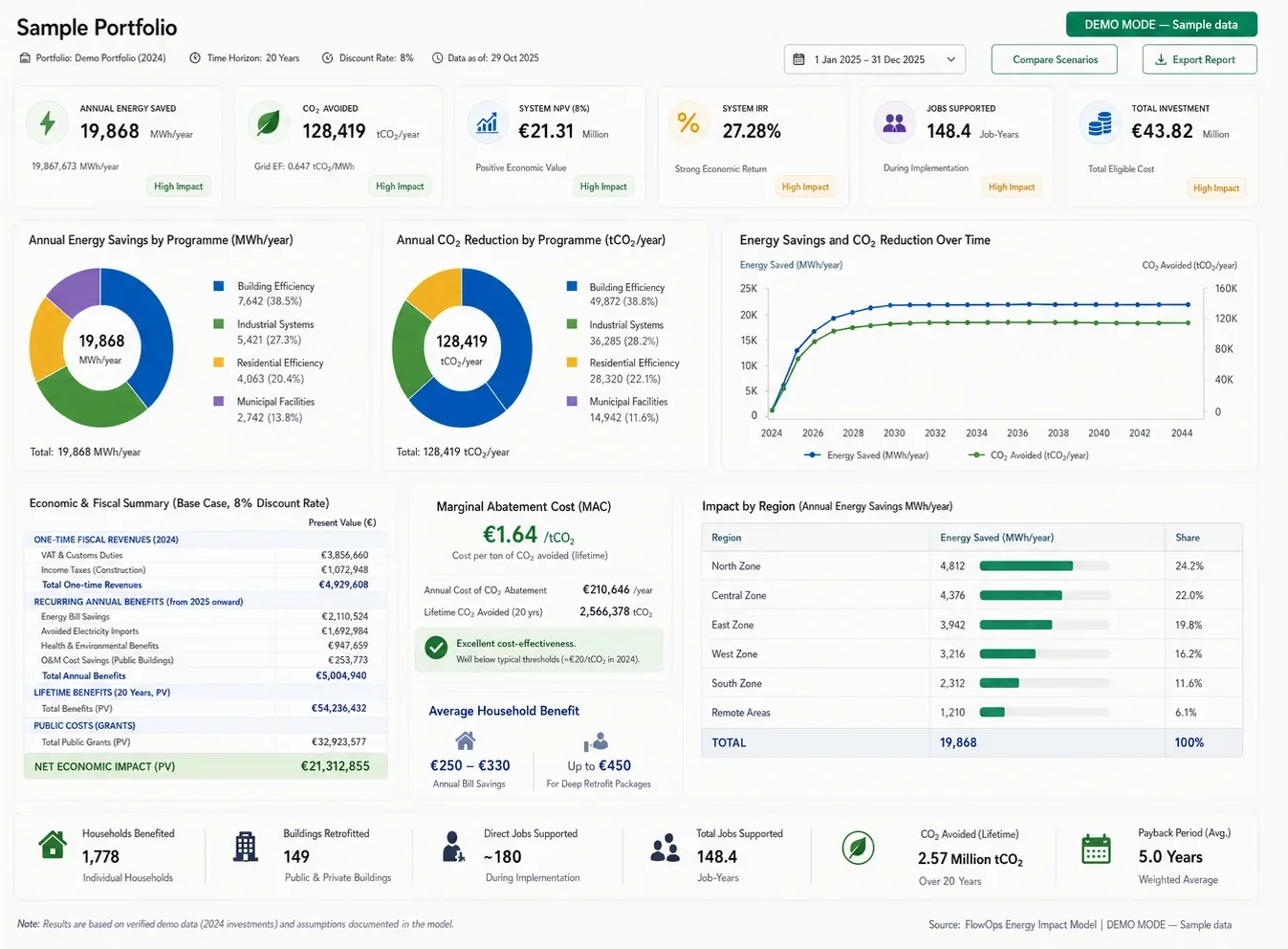
Screenshots
Access model
Commissioned. Scoped and priced as part of an engagement or as a standalone build.
Request a demonstration
Tell us the context, timeline and decision you're working toward.
Request a demonstrationWe reply within two business days.